Back to Blog
Infrastructure
How Dakar’s BRT is Redefining the African City
Emmanuel Clifford Gyetuah·September 8, 2026·4 min
Infrastructure
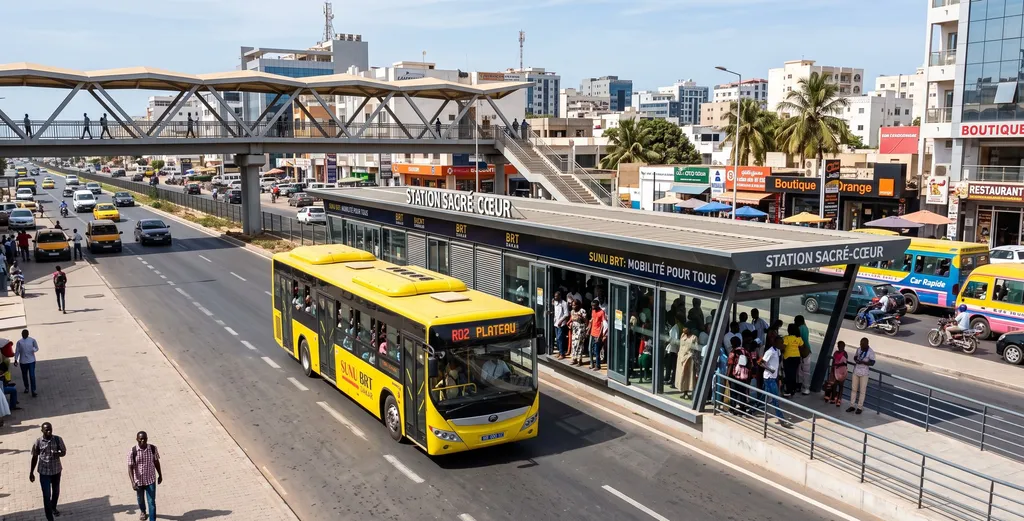
In Dakar, Senegal, history has been made. The launch of Africa’s first all-electric Bus Rapid Transit (BRT) system is more than just a transportation project; it is a profound demonstration of what the World Bank defines as "Smart Development in Action ." By integrating high-capacity green technology into the urban fabric, Dakar is not just solving a local commute problem; it is setting a blueprint for how African cities can leapfrog traditional, carbon-heavy infrastructure to build resilient, inclusive, and high-efficiency metropolitan hubs.
To understand why this achievement is crucial for everyone, we must first look at the scale of the impact. The Dakar BRT project is not a pilot study or a small-scale demonstration; it is a fully operational, high-impact system that addresses the fundamental pain points of urban mobility.
121 Electric Buses: This represents a massive deployment of green energy technology, moving the city toward a cleaner, quieter, and more sustainable future.
300,000 Daily Passengers: The sheer scale of users indicates that this is a critical arterial system for the city’s economy.
Travel Times Cut in Half: In any city, time is the most valuable currency. Reducing commute times by 50% does not just add hours back to a worker's day—it unlocks billions in potential economic productivity across the region.
59,000 Tons of CO2 Avoided Annually: This contributes directly to national and continental climate goals, proving that Africa can lead in green transition.
1,000+ Jobs Created: Beyond the transit infrastructure, the project serves as a catalyst for employment, skill development, and professional training.
Why Commute Time is an Economic Metric
For the average citizen, a reliable transport system is a matter of dignity and opportunity. When a commuter spends hours in traffic, that is lost time that could have been spent on education, business growth, or family care. In the context of the Africa Digital Forum’s mission to foster an "inclusive digital economy," we recognize that digital transformation is impossible without physical connectivity.
A city that flows efficiently is a city where startups can grow, where services are more accessible, and where the " usage gap " described in ADF’s six-point agenda can be bridged through better integration. By cutting travel times in half, Dakar is effectively expanding the reach of its labor market and connecting more people to the opportunities generated by the digital economy. It turns the city into a truly connected ecosystem rather than a collection of fragmented neighborhoods.
At the Africa Digital Forum, we advocate for "authentic technological sovereignty"—an approach where Africa defines its own solutions to its unique challenges. The Dakar BRT is a perfect example of this. It utilizes global technological advancements (electric mobility) but deploys them in a way that respects and serves local market realities.
Lessons for the Continent: The "Leapfrog" Effect
Many skeptics have long argued that Africa must follow the same development trajectory as the Global North—building carbon-intensive infrastructure first and "cleaning it up" later. The Dakar BRT proves this path is obsolete.
Just as the continent "leapfrogged" landline telephones to embrace mobile technology, we are now seeing the potential to leapfrog gas-guzzling, inefficient urban transport in favor of clean, digital-first infrastructure. Rwanda’s eKash system , which has processed over 10.5 million transactions since its launch, is another example of this digital-first mindset. Both projects demonstrate that when African nations invest in interoperable, smart infrastructure, the adoption rate is rapid because the demand for efficiency and inclusion is so high.
Integrating the Agenda: ADF 2027
As we prepare for the Africa Digital Forum (ADF) 2027 in Lomé, Togo, the lessons from Dakar are central to our agenda. Our Forum is built on a six-point agenda that includes "Accelerating Inclusive Digital Access & Literacy" and "Strengthening Regional Cybersecurity & Data Governance".
The Dakar BRT is not just a bus project; it is a digital project. A system of this scale requires advanced data management for scheduling, real-time monitoring of vehicle health, and integrated payment systems that allow passengers to transition seamlessly between transport modes. This is the "digital layer" that turns a transport route into a smart network.
At ADF 2027, we will bring together heads of state, tech giants, and visionary startups to discuss exactly this: how the physical and digital can merge to create sustainable wealth for the continent. We believe that the Dakar model is replicable across the continent, provided there is the political will to prioritize high-capacity, sustainable transit and the institutional capacity to manage it.
The Path Forward
The success of Dakar’s electric BRT is a signal to investors, policymakers, and innovators. It says that Africa is ready for complex, large-scale deployment of modern infrastructure. It proves that sustainability is not a luxury for developing nations but a strategic necessity for long-term growth.
For those of us working to build a unified African digital market, Dakar serves as an inspiration. It shows that when we combine smart policy with modern technology, we can solve the deepest, most systemic challenges of our time.
As we look toward our inaugural forum in Lomé in May 2027, we invite leaders across the tech, media, and investment landscapes to join us in analyzing and scaling these models. The future of the African city is not just in the software we write, but in the infrastructure we build—and if the Dakar BRT is any indication, that future is electric, efficient, and exceptionally bright.
EC
Emmanuel Clifford Gyetuah
Emmanuel Clifford Gyetuah is a versatile leader who specializes in transforming complex financial metrics into actionable strategic insights. Currently, he is the Organizing Director for the Africa Digital Forum, Director at the Media and Digital Institute, and Senior Finance Manager at Bolingo Consult.
Topics:Infrastructure